Philippines Arrival Card — eTravel in English
Complete your Philippines eTravel declaration in English with our online form. Prepare your trip to Manila, Cebu, Boracay or Palawan with peace of mind.
Welcome to the Philippines
eTravel is the mandatory digital arrival declaration introduced by the Philippine government through the Department of Information and Communications Technology (DICT). Launched in 2023 to replace the COVID-era One Health Pass, it must be submitted within a strict 72-hour window before arrival. The form is free on the official portal and generates a green QR code (express lane) or red QR code (health screening). Without a valid QR, airlines may deny boarding to the Philippines.
Strict 72-hour window
eTravel: why the 72-hour window catches so many travellers
Unlike Malaysia (14 days) or Singapore (3 days), the Philippines enforce a strict window that rejects any registration completed more than 72 hours before arrival. It is the number-one mistake among first-time travellers.
The system does not tolerate early submissions: if you try to fill in eTravel a week or five days in advance « just to be safe », the official portal simply rejects the submission. No waiting room, no reservation — you have to come back inside the window.
The window runs from your local arrival time in the Philippines, not from your initial flight's departure time. With a long-haul flight to Manila taking 18 to 24 hours, it is tempting to register « before leaving home » — but if your flight departs D-4 before arrival, the submission is too early. Wait until you are at the airport, in transit, or inside the last 72 hours.
Practical tip: schedule a reminder for 70 hours before your scheduled arrival. That keeps a safety margin while staying inside the window. If you have a long layover (Doha, Dubai, Singapore), that is the perfect time to submit with stable Wi-Fi.
Remember
Never complete your eTravel more than 72 hours in advance. For a flight departing D-3, submit after take-off or during a layover. The QR remains valid until your arrival.
When to complete the Philippines eTravel?
The eTravel system enforces a strict 72-hour window. Not before, not after — plan a reminder.
Earliest
72 hours before arrival time
Optimal
Between 24 and 48 hours before arrival
Latest
At least 1 hour before boarding
Who must complete eTravel?
eTravel covers all passengers travelling to the Philippines, but some situations are worth clarifying.
All foreign passengers on arrival
Regardless of nationality or visa status, eTravel is mandatory if you are arriving in the Philippines by air or sea.
Filipino passengers (arrival and departure)
Filipino nationals must register on both arrival AND departure. Foreign travellers only register on arrival.
Crew members included
Filipino and foreign crew members must also submit an eTravel on every rotation.
Minors and infants
Every child, including newborns, must have their own eTravel filled in by a parent or legal guardian.
Diplomatic exemptions
Exempt: foreign diplomats and dependents, 9(e) visa holders, and holders of diplomatic or official service passports.
Common eTravel mistakes
eTravel has a lower rejection rate than other systems, but a few mistakes keep coming up among first-time travellers.
Submitting too early (D-7, D-5)
The system rejects registrations made more than 72 hours before arrival. By far the most common mistake.
Confusing departure date with arrival date
For a long-haul flight with a layover, the 72-hour window counts from your local arrival time in the Philippines, not from your departure airport.
Fake paid websites
eTravel is free on the official portal. Any platform charging for the official submission is fraudulent — beware of Google sponsored results.
Vague or non-English accommodation address
Enter the hotel or rental name in English, with city and province. Vague entries (« central Manila ») or non-English text are flagged.
Forgetting children's eTravel
Each minor needs their own eTravel and their own QR. A parent's form does not cover children.
Green QR vs Red QR
Green lane or red lane: what is at stake on arrival in the Philippines
The QR code issued by eTravel is not just a boarding pass: its colour determines your journey on arrival in Manila, Cebu or Davao.
Green QR — express lane: your case has been auto-validated. You proceed straight to Philippine immigration without further interaction with the Bureau of Quarantine (BOQ). On average, processing takes 5 to 10 minutes at peak time at Manila NAIA Terminal 3.
Red QR — manual lane: your case needs BOQ verification. This can be triggered by a declared symptom (fever, cough, recent exposure to a notifiable disease), inconsistent data (passport and name mismatches), or simply an incomplete file. Expect 15 to 30 additional minutes and a few follow-up questions.
What does not change: the colour of the QR does not affect your right to enter the Philippines. A red QR is not a refusal, just a deeper check. Philippine immigration (stay, visa, 30-day exemption) remains a separate step after BOQ.
Arriving in the Philippines with eTravel
Whether you land at Manila NAIA, Cebu Mactan or Clark, the flow is the same — only the colour of the QR changes the first step.
- 1
QR check at boarding
Your airline (Philippine Airlines, Cebu Pacific, Qatar, Emirates…) verifies your eTravel QR before boarding. Without a valid QR, boarding is denied.
- 2
Bureau of Quarantine (BOQ)
First step on arrival: a BOQ officer scans your QR. Green QR = express lane to immigration. Red QR = brief interview with a health officer.
- 3
Philippine immigration
Show passport and QR to the Bureau of Immigration officer. For most European nationalities, the 30-day visa-free exemption is granted automatically and the entry stamp is applied.
- 4
Baggage and customs
Collect your baggage. Philippine customs uses green (nothing to declare) or red (goods to declare) lanes. No additional declaration is required via eTravel.
Required Information Table
| INFORMATION TO PROVIDE | PERSONAL DATA |
|---|---|
| PERSONAL DATA | First name, Last name, Date of birth, Sex, Nationality, Passport number, Passport expiry |
| TRIP | Date and time of arrival, Country of origin, Purpose of travel, Countries visited in the past 30 days |
| FLIGHT | Airline, Flight number, Arrival airport in the Philippines |
| ACCOMMODATION | Name and address of accommodation, City, Province/Region, Contact phone number |
| HEALTH | Symptoms (if any), Relevant vaccinations, Emergency contact in the Philippines |
About the Philippines eTravel
What is eTravel?
eTravel must be submitted within 72 hours before your arrival in the Philippines — not earlier. The online form requests personal data, passport details, flight information, accommodation address and a short health declaration. You receive a QR code: green for the express lane, red if the Bureau of Quarantine needs to review your case.
Who needs to register?
eTravel is mandatory for all foreign and Filipino passengers arriving in the Philippines, as well as crew members. Departing Filipino passengers must also register. Foreign diplomats and dependents, 9(e) visa holders, and diplomatic/official service passport holders are exempt.
Which entry points are covered?
eTravel applies to all international entry points in the Philippines: Manila (MNL — NAIA), Cebu (CEB), Clark (CRK), Davao (DVO), Kalibo (KLO) near Boracay, Puerto Princesa (PPS) for Palawan, Iloilo (ILO), as well as international seaports and land borders.
eTravel validity
The eTravel QR is tied to a specific trip and arrival date.
Duration
Valid for the declared arrival only
Entries
One eTravel per entry into the Philippines
Extension
Not applicable: a new eTravel is needed for every trip
Exit
Separate exit declaration — departure eTravel required for Filipinos only
Places to visit in the Philippines
Philippines
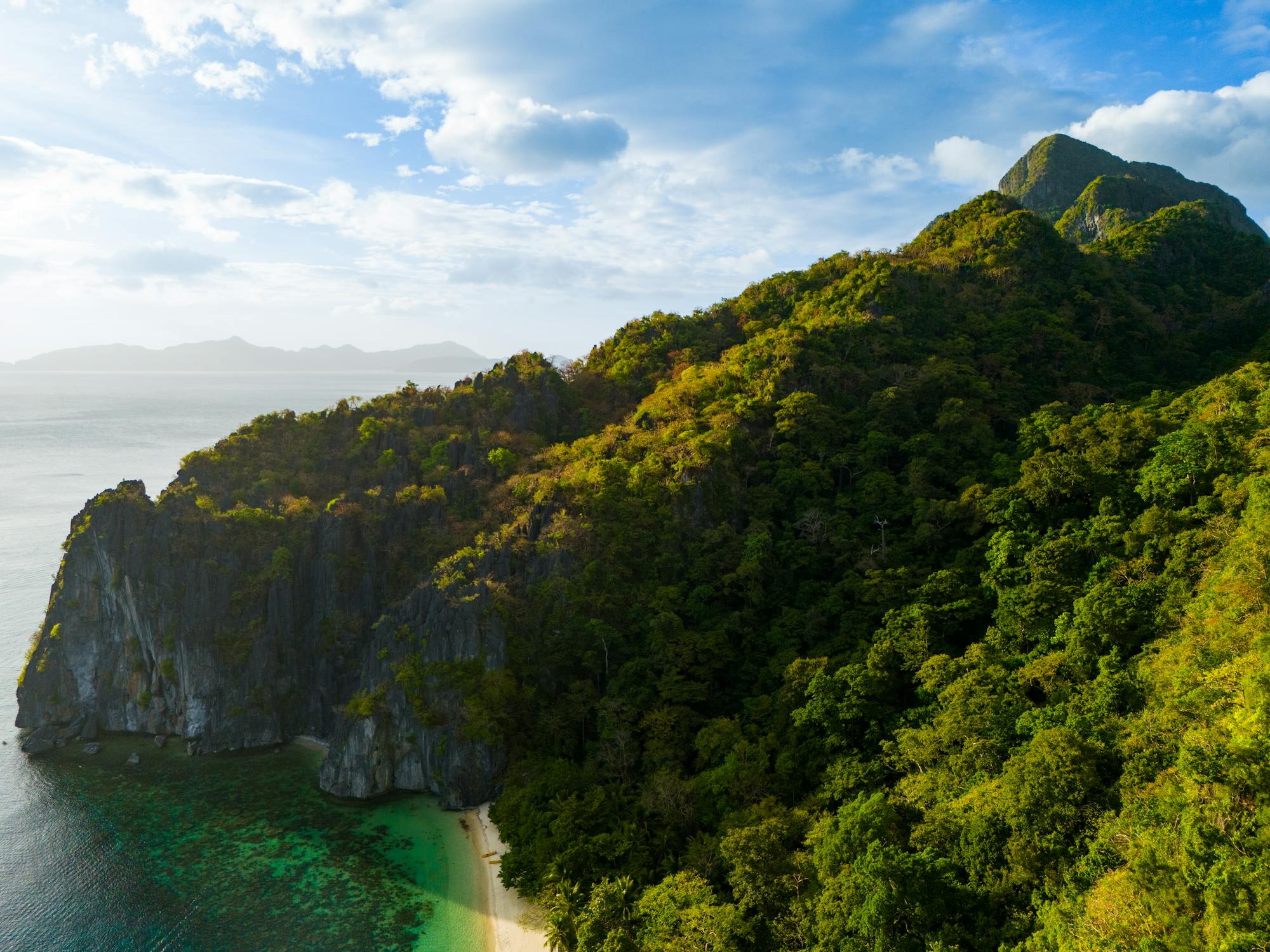
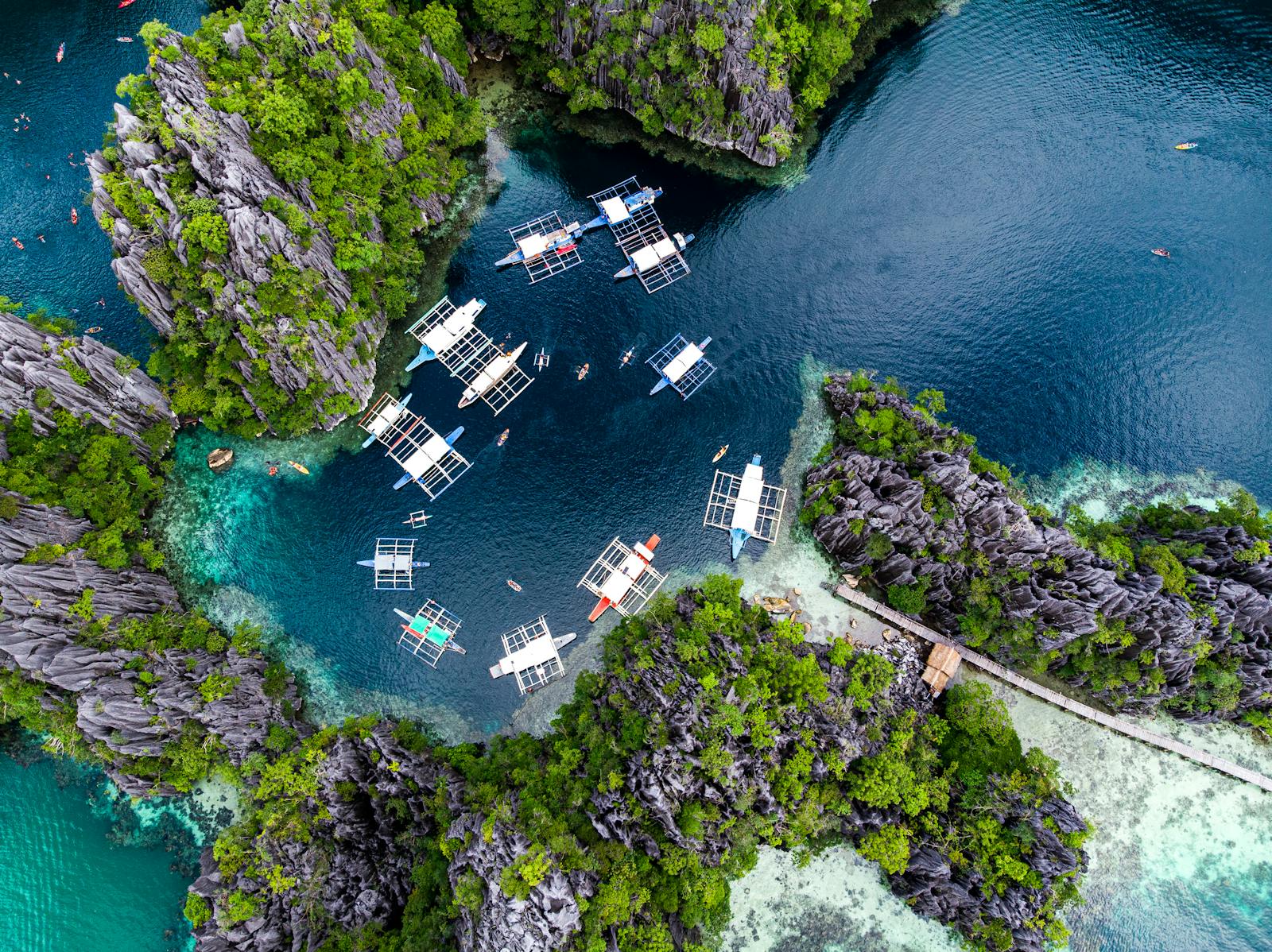
Palawan, repeatedly voted the world's most beautiful island, hosts El Nido, Coron and the Puerto Princesa Underground River. Turquoise lagoons, limestone cliffs and uninhabited islands as far as the eye can see.
Boracay, in the Western Visayas, is famous for White Beach and its powder-soft sand. Ideal for sunset paraw sails, kitesurfing at Bulabog Beach and the tropical nightlife of D'Mall.
Cebu and Bohol concentrate the Chocolate Hills, tarsiers, sardine-run diving in Moalboal and the whale sharks of Oslob — the full diversity of the Central Visayas.
Manila, the sprawling capital, blends Spanish-colonial Intramuros, the modern Makati district, the bustling Quiapo market and Roxas Boulevard's seafront. The natural gateway to the country.
Northern Luzon with the UNESCO-listed rice terraces of Banaue and Batad, the Cordillera region and the La Union surf beaches reveal the mountainous, cultural side of the Philippines.
Document Timeline
History and evolution of the document.
May 2021
Launch of the One Health Pass (OHP) to manage arrivals during the COVID-19 pandemic.
May 2021
Launch of the One Health Pass (OHP) to manage arrivals during the COVID-19 pandemic.
April 2022
OHP becomes mandatory for all arrivals, Filipino and foreign.
April 2022
OHP becomes mandatory for all arrivals, Filipino and foreign.
December 2022
The government announces the eTravel project to unify health and customs declarations.
December 2022
The government announces the eTravel project to unify health and customs declarations.
May 1, 2023
Official launch of eTravel via the DICT, replacing the One Health Pass.
May 1, 2023
Official launch of eTravel via the DICT, replacing the One Health Pass.
July 2023
eTravel becomes mandatory for all foreign passengers on arrival; airlines may deny boarding without a valid QR.
July 2023
eTravel becomes mandatory for all foreign passengers on arrival; airlines may deny boarding without a valid QR.
A reliable and secure service.
Processing Time
Your arrival card is typically processed within 24 hours. We recommend applying at least 3 days before your travel date.
Requirements
Valid passport with at least 6 months validity, recent passport photo, travel itinerary, and accommodation details.
Fees
The service fee is €29 incl. tax per arrival card issued, excluding any consular fees. This covers form translation, application verification, and customer support.
Frequently Asked Questions — Philippines
What is the Philippines eTravel?
eTravel is the mandatory digital arrival declaration for the Philippines, run by the DICT in partnership with the Bureau of Immigration and the Bureau of Quarantine. It replaced the One Health Pass in 2023 and generates a QR code shown at boarding and on arrival.
Is eTravel mandatory?
Yes. eTravel is mandatory for all foreign and Filipino passengers arriving in the Philippines, as well as crew. Departing Filipino passengers must also register. Without a QR code, airlines may deny boarding.
How do I complete eTravel online?
You can complete your eTravel through ArrivalCards. The form requests personal data, passport, flight, accommodation address in the Philippines and a short health declaration. Confirmation and QR are emailed to you.
When should I complete eTravel?
eTravel must be submitted within 72 hours (3 days) before arrival — and not earlier. The system rejects early submissions. This is the most common mistake: complete it between D-3 and D-1.
Does eTravel replace a visa?
No. eTravel does not replace a visa. Most European nationalities benefit from a 30-day visa-free stay, but eTravel is still required. If you need a visa, it must be obtained separately before departure.
What do the green and red QR codes mean?
A green QR means your case is validated and you go through the express lane on arrival. A red QR means the Bureau of Quarantine needs to review your case manually — usually triggered by a health declaration that needs follow-up or incomplete data.
How much does eTravel cost?
eTravel is free on the official portal. Any platform charging for the submission is fraudulent. On ArrivalCards, the service fee is €29 incl. VAT per arrival card for translation, dossier verification and customer support.
Is the form available in my language?
The official Philippine portal is available in English and Filipino only. ArrivalCards provides a translated and simplified form in 9 languages, including English.
What documents are needed for eTravel?
To complete eTravel you will need a passport valid at least 6 months after arrival, your flight number, the full address of your accommodation in the Philippines, your precise arrival date and a valid email address.
Is eTravel required for children?
Yes. Every traveller — including children and infants — must have their own eTravel. Parents or legal guardians fill in the form on behalf of each minor using the child's own passport.
How It Works
Simple, fast, and stress-free.
Fill in the online form
Complete our secure form with your personal information and travel details
Receive your arrival card by email
We process your application and send your electronic arrival card directly to your inbox
Present your card upon arrival
Upon arrival, simply present your electronic card to immigration authorities
Sources
- Bureau of Immigration / DICT — eTravel, Philippine One-Stop Electronic Travel Declaration System
- Bureau of Immigration — eTravel required for arriving and departing passengers (who must register, exemptions)
- Bureau of Immigration — eTravel registration free of charge
- France Diplomatie — Philippines, entrée / séjour
Information checked in September 2026